History of Accounting: How an Ancient Necessity Remains Active Today

The resources on this page provide a historical overview of the accounting profession. Materials for looking at the history of particular firms and individuals are https://www.bookstime.com/ elsewhere in this guide. We have not included all accounting and auditing periodicals and newsletters.
- It helped early accountants calculate receipts and quickly reconcile their books.
- Pacioli’s professional life was marked by a series of remarkable accomplishments.
- The Italian Luca Pacioli, recognized as The Father of accounting and bookkeeping was the first person to publish a work on double-entry bookkeeping, and introduced the field in Italy.
- The financial statements that summarize a large company’s operations, financial position, and cash flows over a particular period are concise and consolidated reports based on thousands of individual financial transactions.
- Accounting methods also found their place in ancient Babylon, Assyria, and Sumer, where primitive techniques were used to record crop growth and herds’ size.
- From clay tokens to double-entry bookkeeping, accounting has adapted and thrived, shaping the world of finance as we know it today.
People also like

It was sometimes referred to as accounting, but bookkeepers were still doing basic data entry and calculations for business owners. The businesses in question were small enough that the owners were personally involved and aware of the financial health of their companies. Business owners didn’t need professional accountants to create complex financial statements or cost-benefit analyses. Luca Pacioli, a key figure in accounting history, is often considered the father of accounting due to his significant contribution to the double-entry bookkeeping system. His efforts laid the groundwork for later development and documentation of accounting methods, making him a key figure in the history of accounting.

Management accounting
In this context, history is not regarded as a sequence of facts, resulting in inevitable cause-effect relationships. On the contrary, it is something we have sought to avoid at all times in order to emphasize a procedural approach in which events can be analyzed in an interpretative manner. Given that history means a chain of cause and effect facts, we must draw attention to the fact that this is an ideal situation, from which we start in order to simplify reasoning. In fact, to the extent that the causes could have been objectively known, history would not have been rewritten so many times. Accounting thus spread from intellectuals to the trading practices of merchants throughout the Middle Ages.

Early History to 17th Century
Accounting historians seek to understand the development of financial reporting and bookkeeping practices and the social, economic, and cultural reasons that shaped these changes. They do this by examining historical QuickBooks documents, books, and artifacts. By promoting the double-entry bookkeeping system and spreading its use, Pacioli allowed businesses and accountants to better track and analyze financial data.
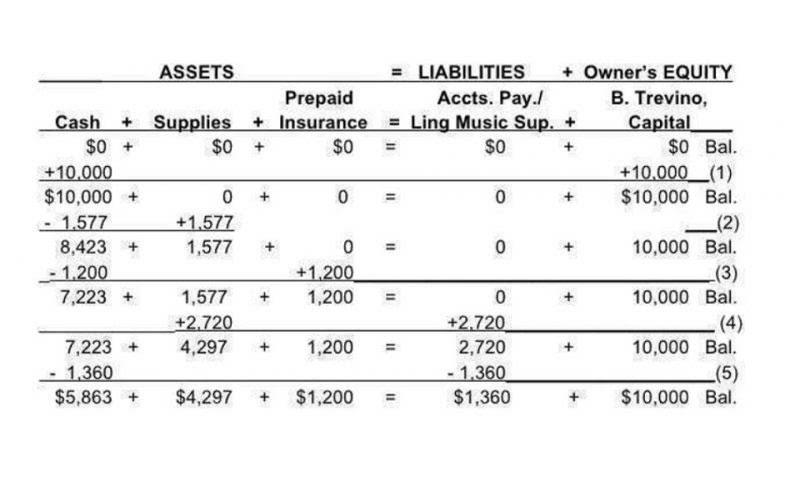
They also assisted in the establishment of capital markets for Western capitalism. In a way, the Renaissance and the success of Italian merchants depended heavily on double-entry bookkeeping. Industrial Revolution businesses needed accountants to prevent insolvency, and huge companies depended on reliable data.
The History of:
- In 1494, he published an important book called Summa, which provided a comprehensive summary of the mathematics known at that time.
- It focuses on the practices and history of accounting in the United States through the middle of the 20th century.
- His writings also guided the creation of standardized accounting methods and principles, many of which are still in use today.
- Its use in organizing business transactions and meeting regulatory requirements makes it a field that requires extensive knowledge and study.
- The final accounting is a summary of accounts filed by the probate executor, showing details of important financial undertakings during the accounting period.
The ancient temples played a pivotal role in the evolution of accounting. They were centers of accountancy economic activity, and the need to control goods, stocks, and transactions gave rise to numerical metaphors. Money, numbers, and accounting became inseparable in their origins, as they emerged within the context of the temple economy.
Recent Comments